
5 Min Read
The home you love isn't quite big enough. In many Greater Lafayette and West Lafayette neighborhoods, families genuinely love where they live. They appreciate their street, their proximity to Purdue University, the character of their home, and the sense of community that comes with it. Children grow. Parents move in. Remote work becomes permanent. Storage disappears. A once-comfortable home begins to feel tight and limited.
When that happens, homeowners are typically faced with two options:
- Move and start over
- Or thoughtfully expand the home they already love
S. Brown Construction helps Greater Lafayette families create well-designed home additions that allow them to remain in their desirable neighborhood while creating a home that truly supports the way they live today.
On this page:
- Traditional Room Additions (Building Out)
- Addition Over the Garage (Bonus Room Additions)
- Full or Partial Second Story Additions
- First-Floor Primary Suite Additions
- In-Law Suites and Multigenerational Additions
- Kitchen Expansion Additions (Bump-Outs)
- Garage Additions with Living Space Above
- Considering a Home Addition in Greater Lafayette or West Lafayette?
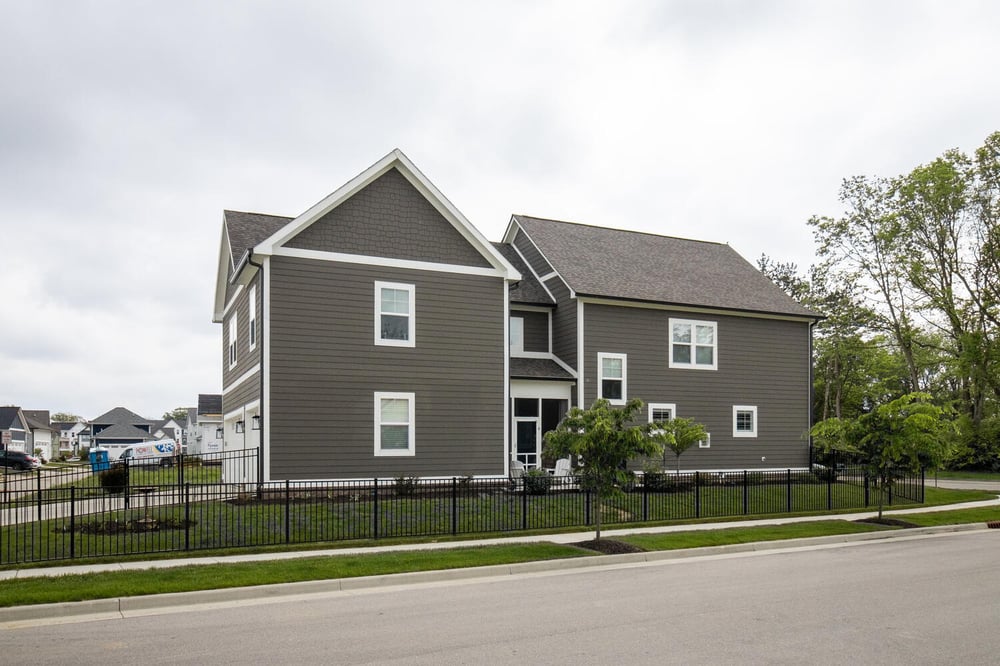
Traditional Room Additions (Building Out)
A traditional room addition, often called “building out,” extends your home’s footprint to create entirely new living space at ground level. This is one of the most versatile and widely requested types of home additions in Greater Lafayette.
What Is a Room Addition?
A room addition involves expanding outward from your existing structure to add:
- A larger family room
- An expanded dining area
- A sunroom or four-season room
- A first-floor bedroom
- Additional storage or mudroom space
In established neighborhoods throughout Lafayette, especially where lot sizes allow, building out can dramatically improve how a home functions without altering its overall character.
Why Greater Lafayette Homeowners Choose This Option
We often see this type of addition in:
- Older neighborhoods where homes were originally built with smaller footprints
- Families who need more main-level gathering space
- Homes where kitchens feel cramped but relocation isn’t ideal
Design Considerations That Matter
A successful room addition requires careful architectural integration. Key factors include:
- Foundation design and soil conditions
- Roofline alignment and pitch transitions
- Structural tie-ins to the existing home
- Matching brick, siding, and trim
- Window placement for natural light
Investment Expectations
In Greater Lafayette, thoughtfully designed room additions typically begin around $80,000 and increase based on size, finishes, and structural complexity. Larger additions with kitchens, bathrooms, or complex roof modifications will naturally require a greater investment.
View our cost guide for detailed local cost information.
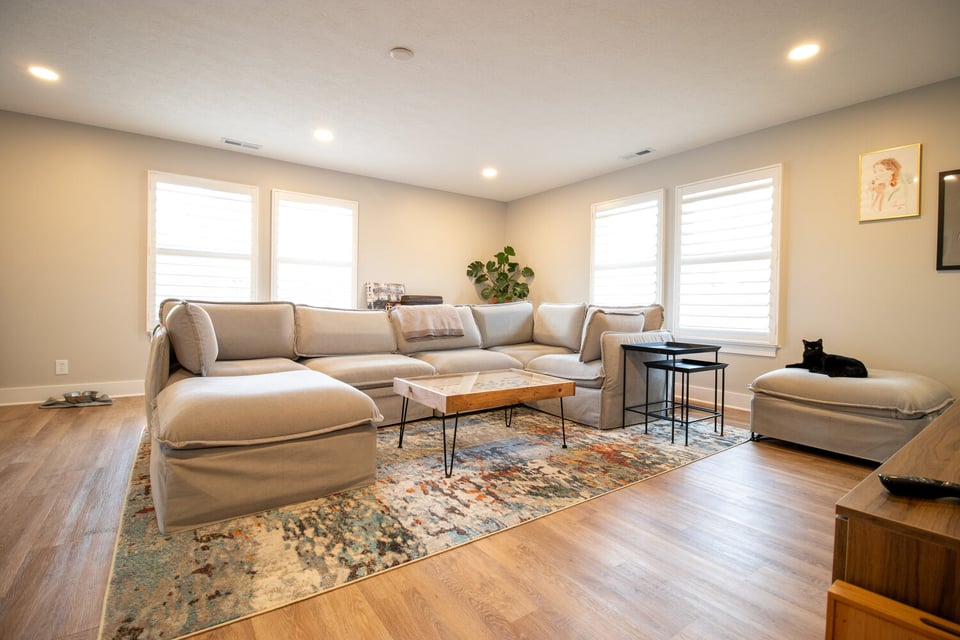
Addition Over the Garage (Bonus Room Additions)
In West Lafayette and newer subdivisions near Purdue University, one of the most popular ways to gain space is building an addition over the garage.
Many homes in these neighborhoods were built with efficient footprints, often three bedrooms, limited flex space, and no dedicated bonus area. As families grow or work-from-home needs increase, the lack of flexible square footage becomes noticeable.
Why This Option Is So Popular Locally
Building up over the garage works especially well when:
- The lot is tight and expansion outward is limited
- The garage footprint is already substantial
- The family needs a dedicated home office or guest suite
- Teenagers need separation from main living areas
In Purdue-area homes, we frequently design these spaces as:
- Home offices
- Bonus or media rooms
- Guest suites
- Playrooms or study spaces
Structural Considerations
Not every garage is automatically designed to support living space above. Before proceeding, we evaluate:
- The existing garage framing
- Load-bearing capacity
- Ceiling heights
- HVAC integration
- Staircase placement
Is It Cheaper to Build Up or Out?
Homeowners often ask whether it’s less expensive to build up instead of out.
The answer depends on structural conditions. In some cases, building over an existing structure can be cost-effective because foundation work is minimized. However, if reinforcement is required, the investment may be comparable to building out.
Over-garage additions in the Lafayette market often begin in the $120,000–$250,000+ range, depending on complexity and finish level.
Full or Partial Second Story Additions
For homeowners who love their lot but feel limited by a small footprint, adding a second story can completely transform the property.
When a Second Story Makes Sense
A full or partial second-story addition may be ideal when:
- The existing home has a small footprint
- The lot size limits expansion outward
- The homeowner wants to double usable square footage
- The neighborhood supports larger homes
We’ve seen many families choose this route when moving would mean giving up a highly desirable location.
Engineering and Structural Planning
A second-story addition is one of the most complex residential projects a homeowner can undertake.
It often requires:
- Foundation evaluation
- Structural reinforcement of existing walls
- Removal and replacement of the roof
- Careful staircase integration
- Temporary structural support during construction
Because of the scope, the design phase becomes even more important. Proper planning reduces surprises and ensures the final home feels cohesive and balanced.
Investment Expectations
In Indiana, full second-story additions typically begin in the $250,000–$350,000+ range, depending on size, design complexity, and finishes. Explore more details about factors influencing cost in our blog here.
View our portfolio to see beautiful projects executed to perfection.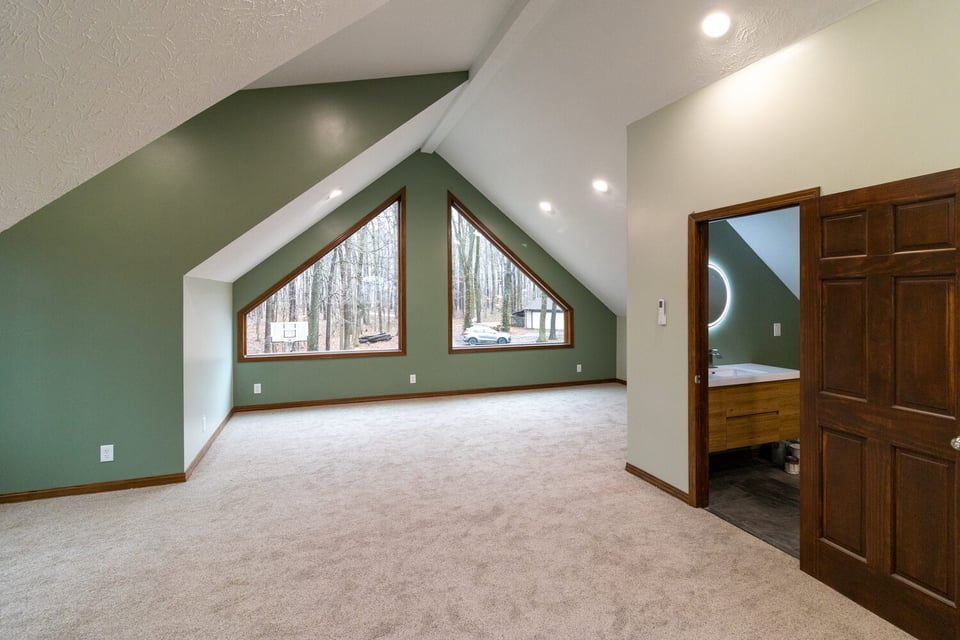
First-Floor Primary Suite Additions
For many homeowners in Greater Lafayette, the need for space isn’t just about square footage — it’s about livability.
We are seeing an increasing number of families choose to add a first-floor primary suite. Sometimes it’s part of a long-term aging-in-place plan. Other times, it’s about creating privacy in a busy household. In both cases, the goal is the same: comfort and flexibility for the future.
Why This Type of Addition Is Growing in Demand
Homeowners who plan to stay in their home for the next 10 to 20 years often realize that navigating stairs every day may not always be ideal. Others simply want a more private retreat away from children or guests.
A well-designed first-floor primary suite addition typically includes:
- A spacious bedroom oriented for natural light
- A walk-in closet designed for function, not just size
- A thoughtfully laid-out bathroom with custom cabinetry and storage
- Consideration for accessibility, whether immediately needed or planned for the future
In established neighborhoods, the challenge is ensuring the new suite integrates seamlessly with the existing structure. The addition should feel intentional — proportioned correctly, balanced with the home’s rooflines, and aligned with existing windows and materials.
When planned carefully, a primary suite addition enhances both the daily experience of the home and its long-term value.
In-Law Suites and Multigenerational Additions
We frequently work with homeowners who are welcoming parents into the household, supporting adult children, or simply planning for greater flexibility in the years ahead. An in-law suite addition allows multiple generations to live comfortably under one roof.
What Makes These Additions Unique
Unlike a simple bedroom expansion, multigenerational additions require a higher level of planning. These spaces often include:
- A private entrance
- A bedroom and full bathroom
- A sitting area or kitchenette
- Sound separation from the main living areas
In rural properties and farmhouse-style homes throughout Tippecanoe County, this type of addition can be beautifully integrated into the architecture. In more compact neighborhoods, careful design ensures privacy without overwhelming the original structure.
Kitchen Expansion Additions (Bump-Outs)
Sometimes the issue isn’t the entire house, it’s one room that simply doesn’t function the way it should.
We often meet homeowners who have already updated cabinetry or appliances, yet the kitchen still feels tight and constrained. In these cases, remodeling alone isn’t enough. Expanding the footprint becomes the real solution.
A kitchen bump-out or expansion addition can dramatically change how a home lives, even if the increase in square footage is modest.
Small Expansion, Significant Impact
Even extending the kitchen by a few feet can:
- Create space for a proper island
- Improve traffic flow
- Add a walk-in pantry
- Increase natural light through larger windows
- Allow for better dining integration
Many older Lafayette homes were built with compartmentalized layouts. Opening the kitchen to adjacent spaces and adding square footage transforms the home from segmented to connected.
Garage Additions with Living Space Above
In rural areas surrounding Lafayette and West Lafayette, garage additions with living space above offer exceptional flexibility. These projects are especially appealing for homeowners with larger lots who want to expand without disrupting the original footprint of the home.
Dual-Purpose Design
A garage addition can provide:
- Additional vehicle or equipment storage
- Workshop space
- A finished bonus room above
- Guest quarters or a home office
When designed with care, carriage-style architecture can enhance farmhouse properties and create a sense of continuity between the original structure and the new addition. Because these additions often involve new foundations and framing from the ground up, they allow for a high degree of design freedom. Ceiling heights, dormers, and rooflines can be tailored to complement the existing home.
Considering a Home Addition in Greater Lafayette or West Lafayette?
If your home no longer supports the way you live but you still value your neighborhood, your lot, and the character of your property, a thoughtfully designed addition may be the right next step.
At S. Brown Construction Co., we begin with a qualification call to understand your goals, your timeline, and whether we’re the right fit for your project. From there, we guide you through a detailed design process, so your addition feels integrated, intentional, and built to last.
Contact Us
If you’re planning a home addition in Greater Lafayette, West Lafayette, or the surrounding communities, we invite you to contact us here to explore what's possible.