5 Min Read
Many homeowners in the Greater Lafayette area find it challenging to manage separate designers and contractors, which is why design-build custom homes are becoming more popular. This approach offers a streamlined, all-in-one solution that’s usually faster and more affordable.
As Greater Lafayette custom home builders since 1999, S. Brown Construction has used the design-build process to remodel and build homes in both established neighborhoods and rural areas. In this blog, you’ll learn about design-build and why it’s the best approach for your custom home.
Table of Contents
- What Is the Design-Build Approach?
- Why Design-Build Is Better for Greater Lafayette Homeowners
- Our Design-Build Process Explained
- Custom Home Trends in Greater Lafayette
- Design-Build vs Traditional Construction
- How Much Does a Design-Build Custom Home Cost?
- Frequently Asked Questions
- Start Designing Your Custom Home Today
What Is the Design-Build Approach?
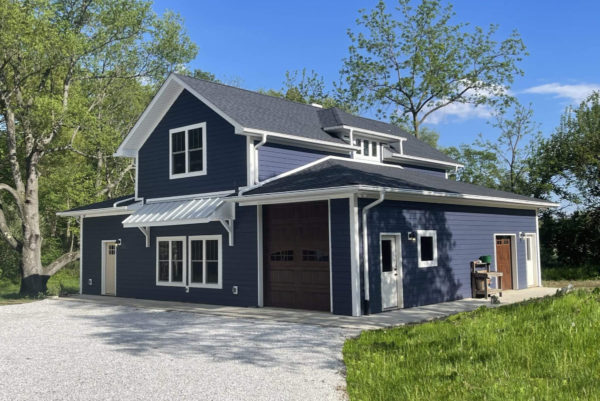
Design-build construction is a project delivery method where a single team handles both the design and construction of your home. It can be applied to home remodels as well as custom builds. Traditional building involves a separate architect and contractor, which can make things more complicated, while design-build uses one unified team.
Why Design-Build Is Better for Greater Lafayette Homeowners
There are many reasons Greater Lafayette homeowners seek design-build contractors to build their custom homes, including:
- Simplified process: There’s one point of contact from start to finish, eliminating the need to juggle communication with multiple professionals.
- Faster project timelines: The design and construction phases overlap, which reduces the timeline compared to traditional build processes.
- Better communication: One point of contact and a single team means fewer misunderstandings.
- Cost efficiency: Design-build offers more accurate pricing and fewer surprises once construction begins.
Our Design-Build Process Explained
Like most design-build contractors, our process begins with a foundation of trust and transparency. It’s structured to provide our clients with a clear understanding of what to expect at every stage of the project.
- Initial consultation call: Allows us to understand your goals, timeline, and budget, and for you to determine whether we’re the right fit for your project.
- On-site meeting: Talk through your needs in greater detail, and understand the space we’ll be working with.
- Design agreement and planning: Once we both agree the project is a good fit, we’ll begin a formal agreement, and our in-house design team will work closely with you to determine every detail. Every decision is documented, so you’ll have clarity before construction begins.
- Estimating and budget alignment: After the design is finalized, you’ll receive a full estimate based on exact materials and specifications, and we’ll discuss any adjustments you want to make.
- Construction contract: We prepare a fixed-price construction contract that outlines all specifications, timelines, and expectations, so both sides have a clear path forward.
- Construction phase: We manage scheduling, site supervision, quality control, permits, and communication, while keeping you informed every step of the way.
- Final walk-through and completion: Once construction is complete, we complete a detailed walk-through with you to address any final items and ensure your expectations have been met.
Custom Home Trends in Greater Lafayette
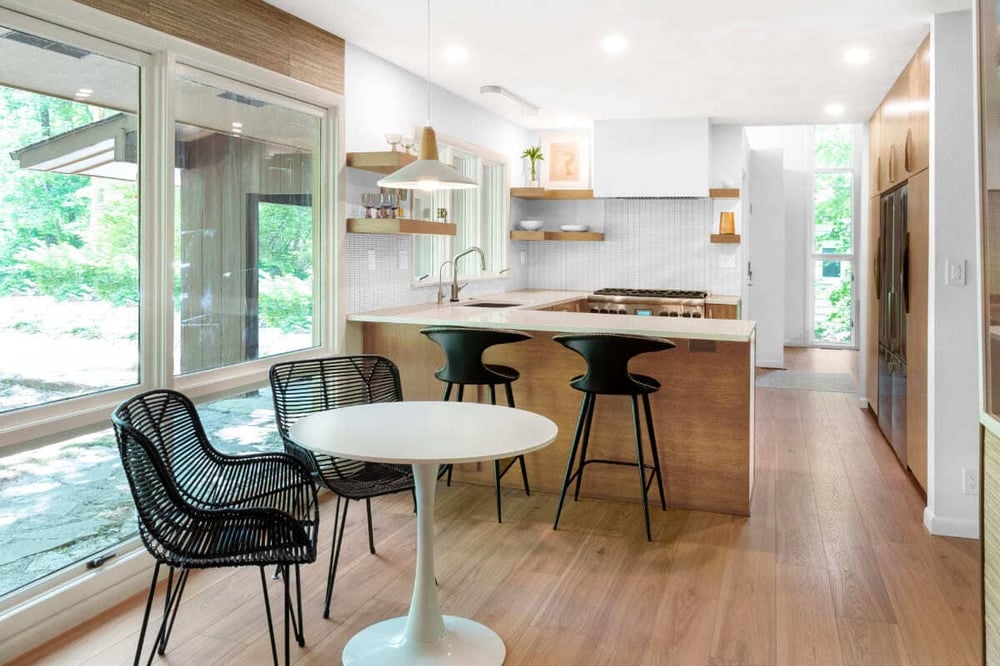
You probably already have some ideas in mind for your custom home, but the options can quickly become overwhelming. These are some of the most popular trends among Greater Lafayette homeowners:
- Open-concept floor plans: Ideal for entertaining, family gatherings, and flexible use of your space.
- Energy-efficient designs: More cost-effective and environmentally friendly.
- Smart home technology: Incorporating technology into your custom home design creates a seamless, convenient experience.
- Multi-functional spaces: Home offices and flex rooms allow your home to meet your family’s needs as they change over time.
- Outdoor living areas: Decks, patios, and other outdoor features give you more ways to enjoy your space and make it more enjoyable to spend time outside.
For more ideas, browse some of our past projects in our portfolio.
Design-Build vs Traditional Construction
To help you better understand the differences between design-build and traditional construction, we’ve broken down a comparison of the key factors.
Project Management
Design-build uses a single team that handles all design and construction, while the traditional method involves multiple parties.
Communication
Communication is streamlined with a design-build team, which makes the process simpler for homeowners. Having to balance multiple parties can result in fragmented communication and frustration.
Timeline
Because the design and construction phases overlap with a design-build team, timelines are usually faster. Traditional methods often take longer due to each phase being separate and depending on other parties.
Cost Control
Cost is more predictable when working with a design-build contractor. There’s usually a lot more variation in cost when building with the traditional method.
Accountability
Design-build provides one source of accountability for the project from start to finish, while there’s a shared responsibility among all parties involved in a traditional build.
How Much Does a Design-Build Custom Home Cost?
The cost of your design-build custom home depends on the size of your new home, the features you want to include, and the materials and finishes you choose. Here are some examples of cost ranges and what they might include in addition to design, permit pulling, labor, and construction materials:
Starter Custom Home: $150 - $250/square foot
- Stock pre-built cabinets
- Luxury vinyl plank flooring (LVP)
- Standard vinyl windows
- Laminate or prefabricated countertops
- Builder-grade plumbing and electric
Mid-Range Custom Home: $250 - $350/square foot
- Semi-custom cabinets
- High-end LVP or standard tile flooring
- Premium vinyl or composite windows
- Custom quartz or granite countertops
- Upgraded plumbing and electrical fixture packages
Luxury Custom Home: $350+/square foot
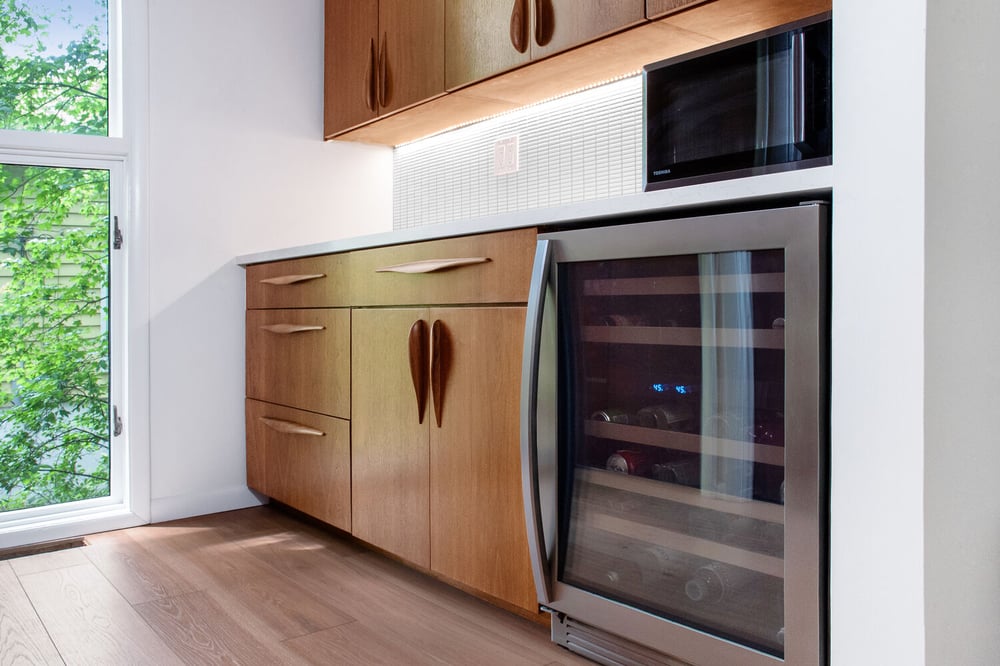
- Full custom kitchen and vanities
- Hardwood and premium tile flooring
- Aluminum-clad or fiberglass windows
- Premium marble or exotic quartz stone countertops
- Designer lighting and smart home technology
For more detailed information, download our cost guide.
Tips for Planning a Design-Build Custom Home
Following these tips will help your custom home build go as smoothly as possible:
- Define your goals and lifestyle needs early: Having a clear idea of your goals helps simplify the planning and design process.
- Set a realistic budget: Understanding what you can afford helps narrow down your choices, which simplifies decision-making.
- Prioritize must-haves vs nice-to-haves: A clear list of must-haves makes it easier to add the nice-to-haves when your budget allows.
- Stay involved throughout the process: Communicate with your contractor regularly to stay informed about each step and work through any issues that arise.
- Choose a design-build contractor you can trust: A design-build contractor with custom home building experience, local knowledge and reputation, and a transparent pricing process will give you the best experience.
Frequently Asked Questions
What is design-build?
Design-build construction is a delivery method where a single team handles both the design and construction of your home. Traditionally, the design phase is handled by an architect, and a separate contractor builds based on the plans.
Why is design-build better for custom homes?
- Streamlined project management: Planning and execution are coordinated by the same team.
- Better budget control: Cost estimates are finalized early during the design phase.
- Improved collaboration: The designers and builders for your project work together from the start.
- Higher quality results: The streamlined process results in fewer errors and delivers better craftsmanship.
What are common misconceptions about design-build construction?
- It will be more expensive, but it’s often more cost-efficient than the traditional approach
- There will be less design flexibility, but it’s still highly customizable
- It’s only appropriate for large projects, but it works for various home sizes
How long does a custom home take to build?
There is no set timeline for a custom home build, since every project is unique, but it typically takes about 8-14+ months from initial design to completion. We spend about 3-6 months, sometimes longer, on the design and planning process, to ensure your home is built exactly as envisioned, without costly surprises. The construction phase usually takes about 5-10+ months. The biggest factors that will affect your timeline are:
- Design complexity
- Client decision speed for selections and approvals
- Seasonality (Midwest winters)
- Home size
- Permitting and site conditions
Can I make changes during construction?
It is possible to make changes during construction, but we strive to avoid this through our detailed design process, where full material selections are made, and the budget is agreed upon before construction begins. This helps prevent surprises and change orders. Frequent changes mid-build add cost and delays to your project.
Start Designing Your Custom Home Today
If you’re considering a custom home build in Greater Lafayette or the surrounding communities, contact us to discuss the possibilities.